How AI Enhances Website Accessibility for All Users
- Zeqons Digital
- Dec 12, 2025
- 3 min read

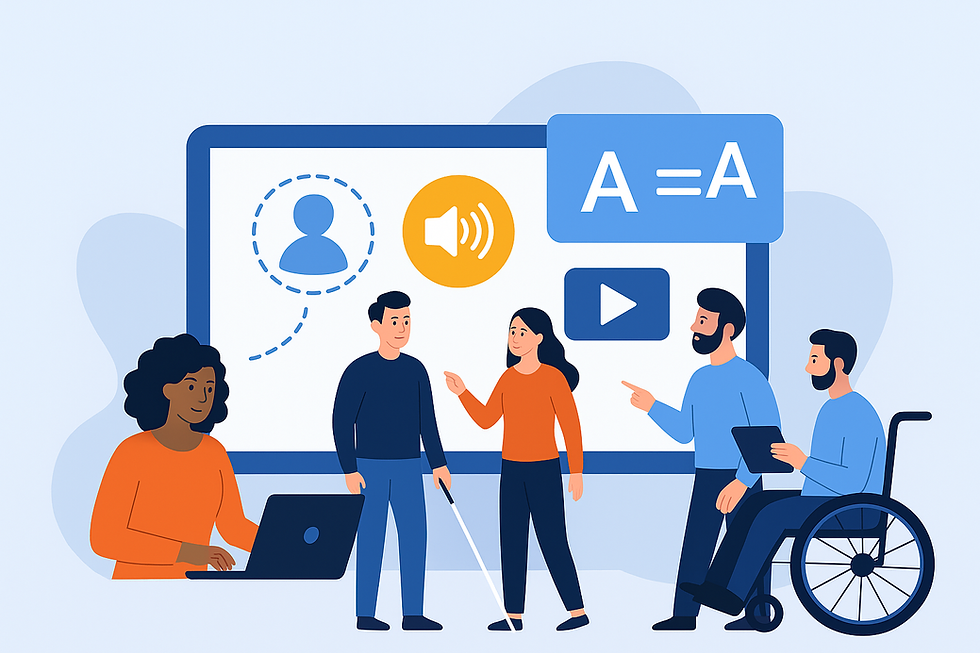
The internet has become an essential part of daily life, from shopping and learning to communication and entertainment. But despite the rapid growth of digital platforms, millions of users still struggle to access websites due to visual, auditory, cognitive, or physical challenges. This is where the power of Artificial Intelligence (AI) is transforming the landscape.
AI isn’t just improving user experience; it’s making websites more inclusive, intuitive, and accessible for everyone. For brands that want to build a strong, future-ready online presence, AI-powered accessibility isn’t an option; it’s a responsibility.
At Zeqons Digital- the best digital marketing firm, we help businesses create digital experiences that every user can navigate with ease, comfort, and confidence.
Why Website Accessibility Matters More Than Ever
Website accessibility goes far beyond compliance. It’s about ensuring that every visitor — regardless of ability- can engage with your content, understand your message, and perform key actions without barriers.
Accessible websites help businesses:
Reach a larger audience
Improve user satisfaction
Increase conversions and retention
Strengthen brand trust
Follow global accessibility standards (WCAG, ADA, etc.)
Today’s online users expect seamless navigation, clear readability, and adaptive functionality. AI bridges the gap by enabling websites to intelligently understand user behavior and adjust experiences in real time.
AI as the Backbone of Modern Website Accessibility
AI brings speed, intelligence, automation, and personalization to accessibility. It allows websites to automatically detect usability issues, assist users with different abilities, and deliver tailored experiences without manual intervention.
Here’s how AI is reshaping accessibility:
1. AI-Powered Screen Readers and Voice Assistants
Traditional screen readers rely on pre-coded alt text or structured HTML. But AI takes it a step further.
AI-driven screen readers can:
Identify objects in images
Read complex visual layouts
Interpret charts or graphs
Understand contextual meaning
Translate elements into spoken language
This makes content far more understandable for visually impaired users. Voice-controlled navigation also lets users browse websites effortlessly using simple spoken commands.
2. Automatic Captioning and Transcription
AI tools can automatically generate accurate captions for videos and audio content. This is crucial for users with hearing difficulties.
AI-powered captioning helps by:
Converting speech to text in real time
Adding captions to video-based content
Providing transcripts for webinars, tutorials, and podcasts
Improving comprehension across languages
For global brands, AI transcription also enhances multilingual accessibility.
3. Predictive Text and Readability Enhancements
Users with cognitive challenges often benefit from simplified content. AI helps improve readability by:
Converting complex sentences into simpler versions
Offering word predictions
Highlighting key information
Summarizing long passages
Adjusting text spacing and font for easier reading
This ensures smoother comprehension and reduces frustration for a wide range of audiences.
4. Personalized Website Adjustments in Real Time
AI enables dynamic accessibility by adapting site behavior based on each user’s needs. It can automatically detect:
Preferred text size
Color contrast requirements
Navigation patterns
Interaction challenges
Motion sensitivity
Based on these signals, AI can instantly modify website layout, change contrast levels, enable dyslexic-friendly fonts, or simplify navigation — creating a truly personalized experience.
5. Voice-Based Search and Interaction
Voice search isn’t just convenient, it’s a major accessibility feature. For users who cannot type easily, AI-powered speech recognition provides hands-free navigation, making websites significantly more user-friendly.
It improves interaction by allowing users to:
Search for information
Fill forms
Navigate menus
Complete purchases—all through voice commands.
6. AI Tools Detect and Fix Accessibility Issues Automatically
AI scanners can analyze entire websites in seconds to detect accessibility issues such as:
Missing alt text
Low contrast ratios
Improper heading hierarchy
Unlabeled buttons
Broken keyboard navigation
Complex layouts
Instead of waiting for manual audits, AI continuously monitors and improves accessibility, ensuring long-term compliance and performance.
Zeqons Digital: Making the Web Accessible, One Website at a Time
Creating accessible digital experiences requires the right blend of technology, creativity, and empathy. At Zeqons Digital, accessibility is woven into every design and development decision we make.
As the best website designing service, we use AI-driven techniques to craft websites that are not just visually stunning but also universally accessible. And as a trusted digital marketing company, we help brands understand the value of inclusion, ensuring every user feels welcomed, understood, and empowered.
The Future of Accessibility Is AI-Powered — and It’s Already Here
AI has opened a new chapter in digital accessibility. With its ability to learn, adapt, and personalize, AI ensures that every user, regardless of ability, enjoys a smooth, meaningful online experience.
Brands that embrace AI-powered accessibility not only expand their audience but also build deeper trust and long-lasting engagement.
At Zeqons Digital, we’re committed to helping businesses create websites that are smart, inclusive, and ready for the future.

Comments